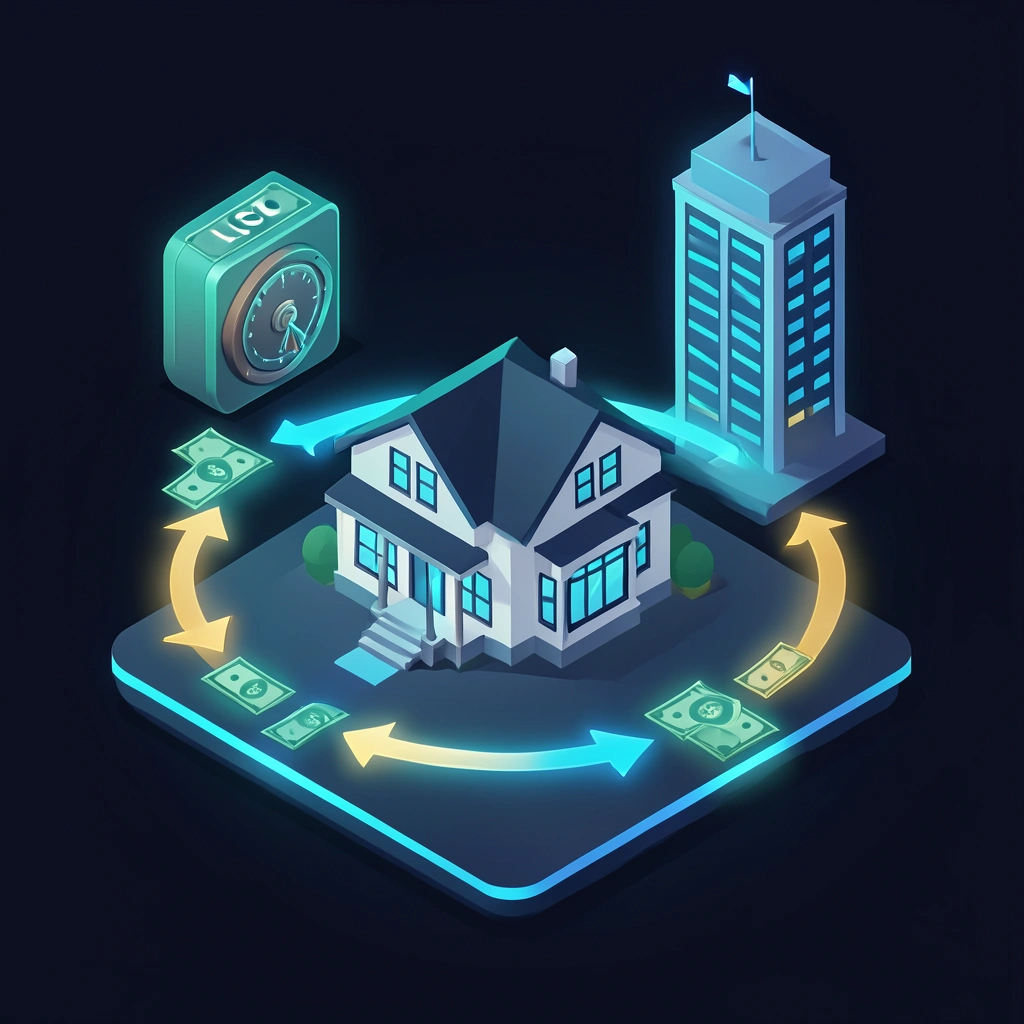
1 · The money flow of a single deal
Two lenders, one LLC, a happy seller. Example figures: a $225,000 purchase.
Step by step
Each step pairs the move with the illustration from the home page.
Meet the full price
Agree to the seller's full asking number (assuming it appraises). You're not haggling price — you're trading a strong price for aggressive terms and more equity paid up front. "More aggressive than bank terms."

Finance the down + the escrow leg
The debt fund finances the down payment (~$80k). A separate transactional funder covers the escrow leg (~$125k) for a one-day close, then gets paid back at closing.

Stack the seller into the LLC
A new LLC is formed during escrow to hold the property. On the same day, the seller's remaining balance is converted into a capital contribution — they keep a small (~5%) equity position instead of a note. Title stays clean.

Refinance the seller out — tax-smart
At the balloon (often 5–7 years) you refinance and pay the seller from the new loan proceeds. Because they hold a membership interest, that payout is a debt-financed distribution — debt received, generally not taxed as income. (Confirm with a CPA.)

The end buyer can actually finance it
Because the property sits cleanly in the LLC (no wrap, no lien), an end buyer/assignee can get a loan on the whole property and leverage up — Ben calls it a "130% strategy," with the buyer often walking with ~$40k at their close.

Protect both sides
The operating agreement builds in a 60-day cure: miss an obligated payment (taxes, insurance, HOA) and, if uncured for 60 days, the seller automatically becomes 100% majority equity of the LLC — essentially getting everything back.

2 · The timeline
From a two-leg same-day close to the balloon-refi exit.
3 · The 60-day default rule
The seller's safety net, straight from the operating agreement (Clip A).
Illustration gallery
All visuals generated for this course (FLUX-2 klein-9b). Click to enlarge.